Discover the Basse-Terre coast of Guadeloupe
Privatization
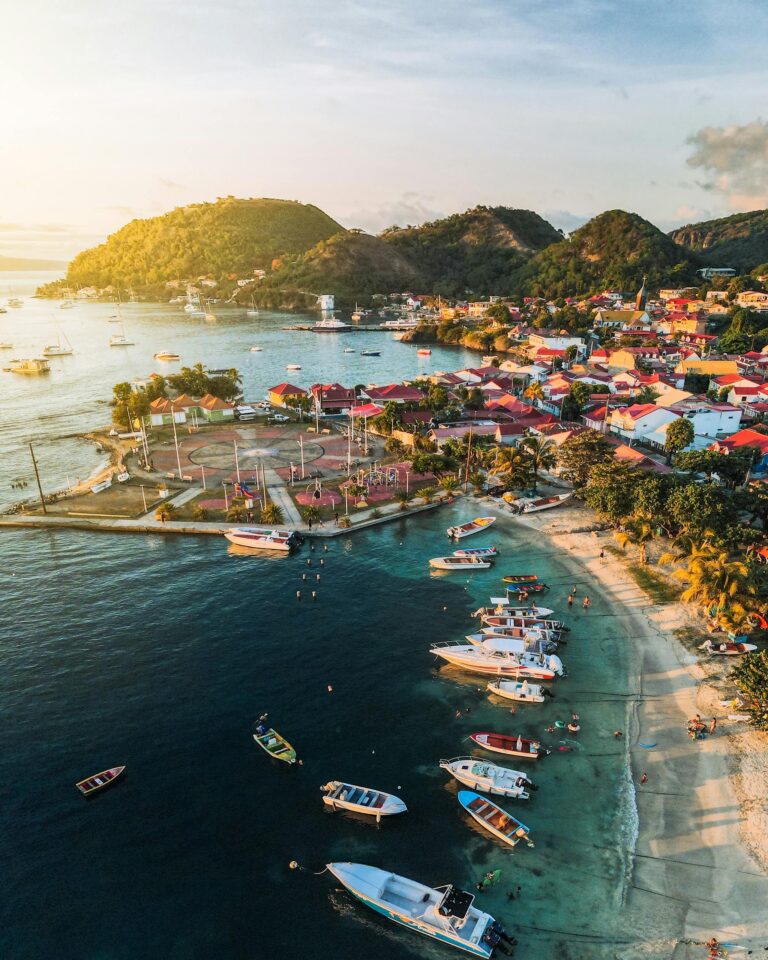
Private Sailing and Snorkeling Excursion in Les Saintes
Starting at $898
PRIVATE SAILING AND SNORKELING EXCURSION IN LES SAINTES An all-inclusive dream day on the Les Saintes archipelago! 100% sailing trips with introductory lessons available. Highly qualified captain. Eco-friendly activity /...
Complete a group
Sailing and Snorkeling Excursion in Les Saintes
Starting at $130
SAILING AND SNORKELING EXCURSION IN LES SAINTES An all-inclusive dream day on the Les Saintes archipelago! 100% sailing trips with introductory lessons available. Highly qualified captain. Eco-friendly activity / tourism...
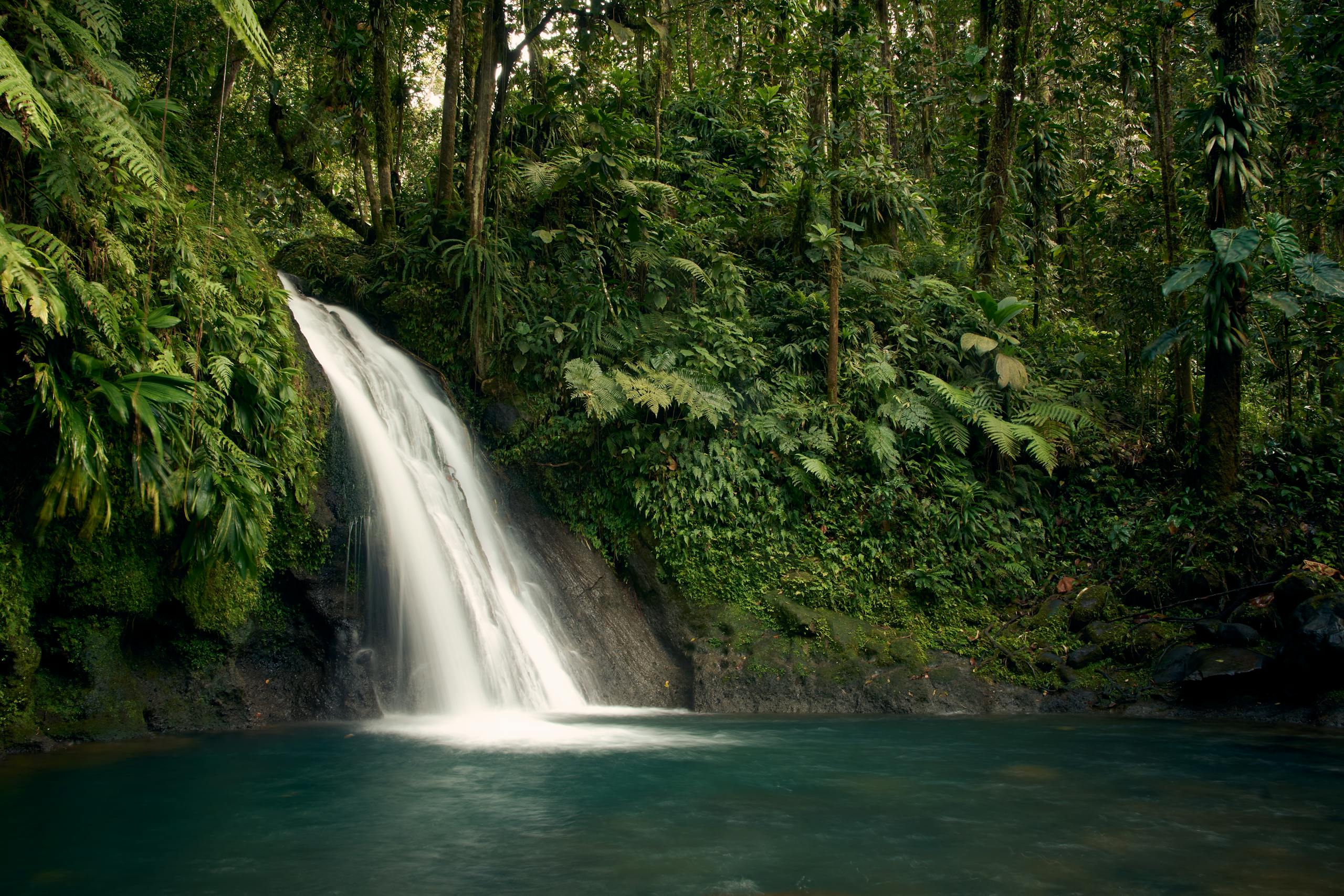
Home to the Soufrière volcano, the Basse-Terre region of Guadeloupe is well known for its mountains and waterfalls. But while it may not have as many white sand beaches as Grande-Terre, Basse-Terre is definitely not lacking when it comes to the sea.
Sailing in the Grand Cul-de-Sac Marin
Between northern Grande-Terre and northern Basse-Terre, the Grand Cul-de-Sac Marin is a magnificent marine area protected by the coral reef and part of Guadeloupe National Park.
It offers a beautiful natural setting where you can explore the seabed while snorkeling and land on a few islets (depending on regulations). The mangrove forest along the coastline is an ecosystem that is essential to the balance of the Grand Cul-de-Sac. This is why the Grand Cul-de-Sac Marin is an area with a fragile balance, where some islets are threatened by natural erosion as well as human activity. To find out more, read our article dedicated to the Grand Cul-de-Sac Marin.
On the Basse-Terre side, the Grand Cul-de-Sac Marin is bordered by the town of Sainte-Rose and its two beautiful beaches, Les Amandiers (named after the almond trees that grow there) and Cluny. On the latter, be careful of the waves and the current!
Sailing in Deshaies Bay
In Deshaies Bay, the first stop on the Leeward Coast, there are two small islands, beautiful pink sand beaches, and seabeds that are well worth a visit.
Classified as the heart of Guadeloupe National Park's terrestrial park, the Kahouanne and Tête à l'Anglais islets are home to rare endemic plant species and serve as a refuge for seabirds. Kahouanne Islet, named after a species of turtle, is also a nesting site for sea turtles. To preserve these two islets, which are difficult to access in any case, it is best to enjoy the spectacle from a distance.
Opposite the islets lies La Perle beach, whose sand, like that of Grande Anse and Anse Tillet beaches, takes on a pink hue at sunset. While caution is advised at Grande Anse and Anse Tillet due to strong currents, La Perle beach is protected by a coral reef, making it a great spot for snorkeling. The English island of Montserrat can also be seen from La Perle beach, which can be reached in about 8 hours.
The famous Cousteau Reserve in Bouillante
When sailing to Bouillante, it is not uncommon to spot marine mammals. Pantropical spotted dolphins, bottlenose dolphins, pilot whales, even migrating humpback whales, or even sperm whales for the luckiest visitors. In any case, it is important to know that all marine mammals are protected species in France.
In the Agoa Sanctuary, which includes the waters of Guadeloupe, observation and approach regulations apply. Voluntary approach to marine mammals is strictly prohibited within 300 meters. If animals come near your boat, keep in mind that no attempts to feed, touch, or enter the water are permitted.
In Bouillante, on the sea side, the main attraction is obviously the Cousteau Reserve off Malendure Beach. Opposite the beach are the Pigeon Islets, two small islets whose seabeds are the main attraction. With a mask and snorkel, all kinds of corals and fish species reveal themselves to snorkeling enthusiasts.
A trip to Bouillante would not be complete without a dip in the town's seawater, which is deliciously warmed by sulfur springs. In Anse à Sable, after walking along the beach, there is a small site by the water where you can enjoy another hot spring.
The marine curiosities of Basse-Terre
On the Vieux-Habitants side is Anse à la Barque, a peaceful haven with a small lighthouse and fishing boats moored at the shore. Underwater, old boat launch rails, turtles and shipwrecks can be explored with a mask and snorkel. Cannons, masts, anchors: a few remains of 22 shipwrecks are visible, while most of the archaeological remains remain hidden in the sand.
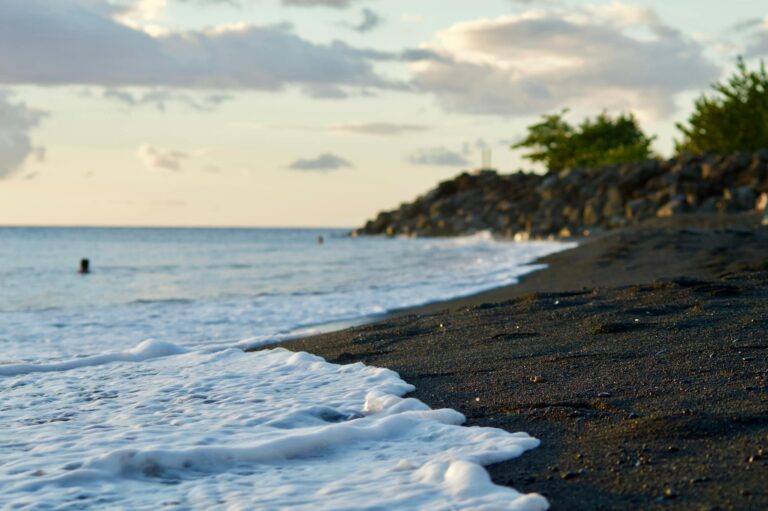
In Trois-Rivières, Grande Anse beach is one of the few black sand beaches in Guadeloupe. A popular spot for bodyboarding, it is also a nesting site for leatherback and green turtles.
In the town of Goyave, the attraction comes from a small heart-shaped coral island bathed in the waters of Petit Cul-de-Sac Marin, known as Îlet Fortune. Covered in mangroves, it once allowed Native Americans to hide from settlers, just like Îlet Nègre and Îlet Cabrit. Today, you can dock there to spend the day. A shipwreck not far from the islet emerges from the water and can be approached for a snorkeling session.
Beautiful sea excursions in Basse-Terre!
Article written by: Axelle Dorville