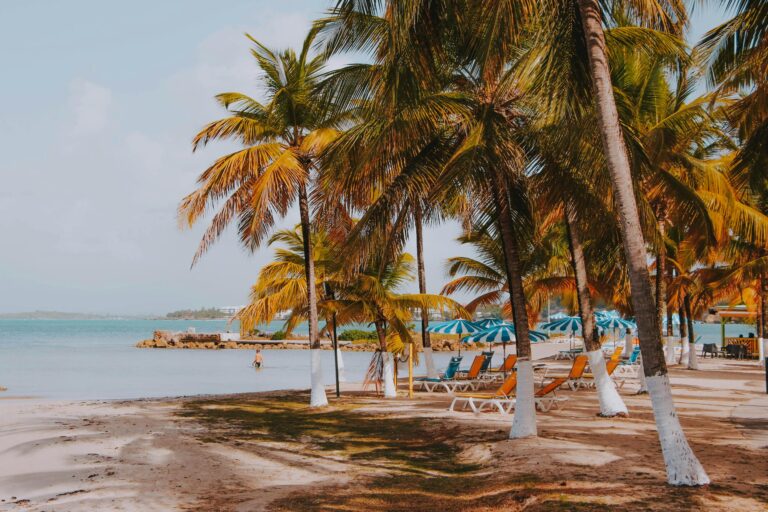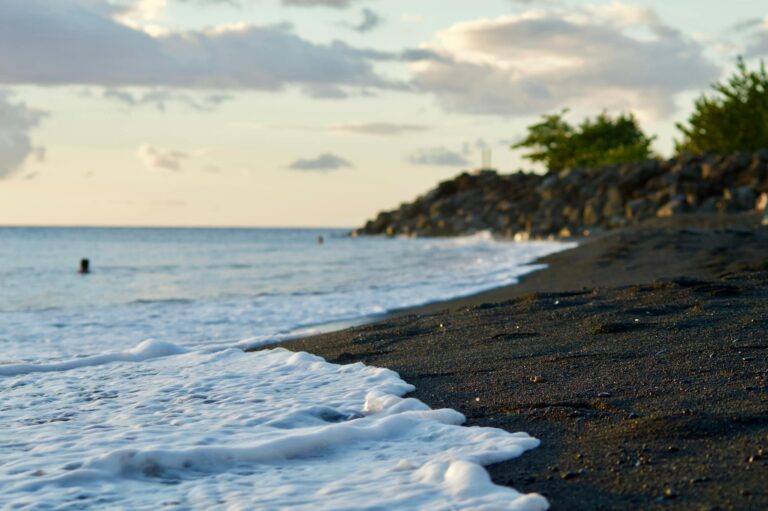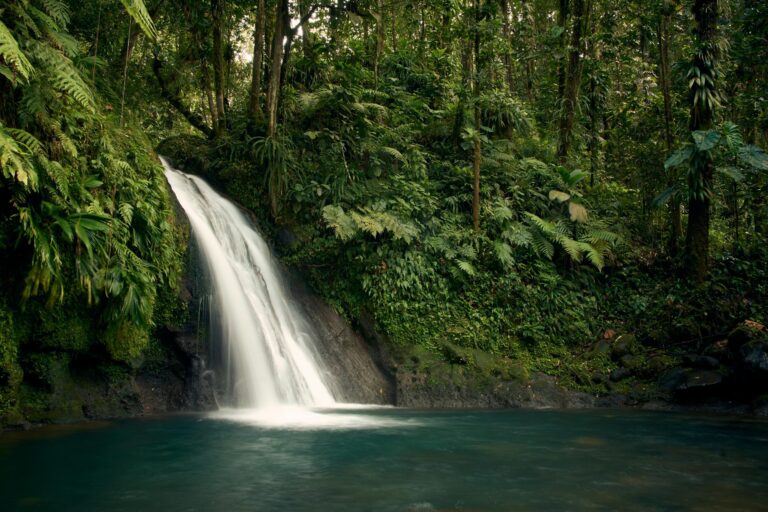
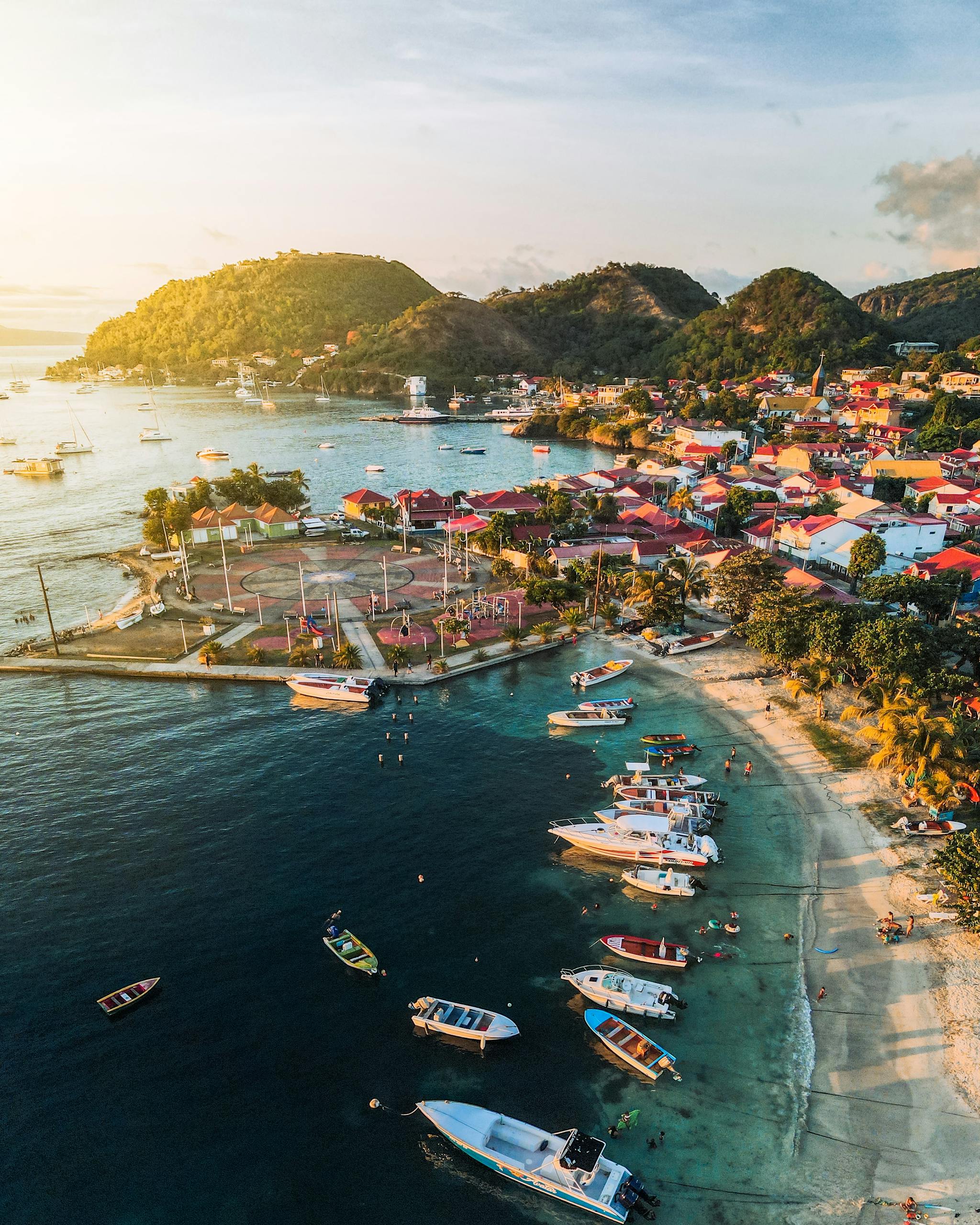
The "Grande-Terre" coast of Guadeloupe
Half day
Demi journée Découverte
Starting at $70
Embarquez à la demi journée pour une découverte de la navigation sur un trimaran de course et terminez la balade au lagon de l'Ilet du Gosier. Pour ceux qui veulent…
Complete a group
Day trip to Marie Galante
Starting at $120
Embark on a day trip to the magnificent island of Marie Galante. Marie-Galante has retained its authenticity and will captivate you with its charms. Here you will find unspoiled countryside in...
Grande-Terre is the eastern part of Guadeloupe, known in the marine world for its beautiful beaches with turquoise waters, its surfing and diving spots, and its marinas. Grande-Terre is also the starting point for crossing over to the islands of the Guadeloupe archipelago, namely Les Saintes, Marie-Galante, La Désirade, and Petite-Terre. Here is an overview of the nautical pleasures of Grande-Terre.
In Le Gosier, water sports and relaxation
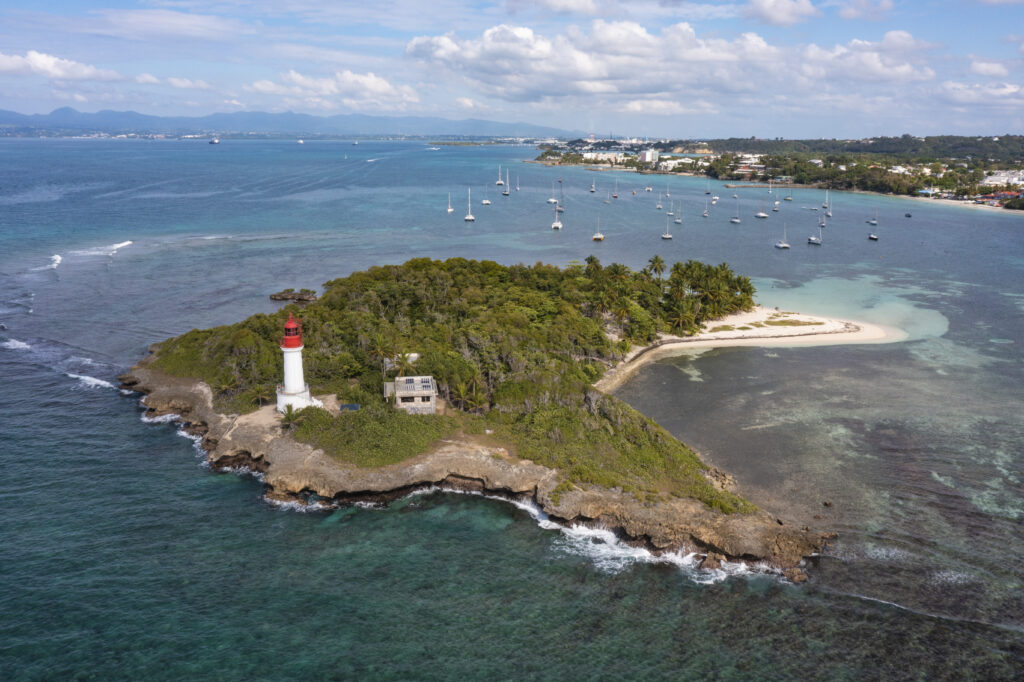
Welcome to the Petit cul-de-sac marin. Located just outside Pointe-à-Pitre, the town of Gosier is the next stop on your journey to discover southern Grande-Terre.
On a boat trip, you can discover Datcha Beach and Gosier Islet, protected by the coral reef. You can choose to stroll around the islet or laze on its sandy beach. Underwater, all you need is a mask and snorkel to encounter the species that inhabit Guadeloupe's waters, such as parrotfish, lionfish, sea urchins, and more.
From Datcha Beach, you can enjoy a drink at one of the beach restaurants or rent a kayak or paddleboard.
Beaches with turquoise waters, kite surfing, and windsurfing in Sainte-Anne
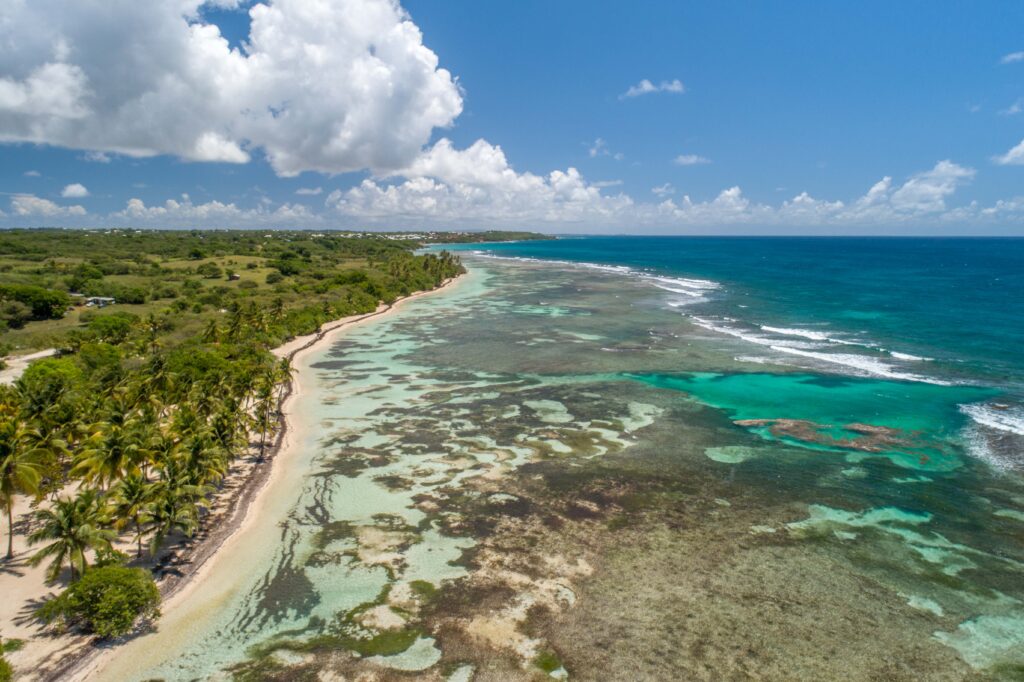
Sainte-Anne is the next stop after Le Gosier. There, when it comes to beaches, you'll be spoiled for choice: Bois Jolan, Petit Havre, La Caravelle, Plage du Bourg. In all cases, crystal clear, turquoise blue waters await you. Sports enthusiasts will prefer Pointe de la Saline for kitesurfing or Pointe du Helleux for surfing.
Saint-François or the eastern tip of Guadeloupe
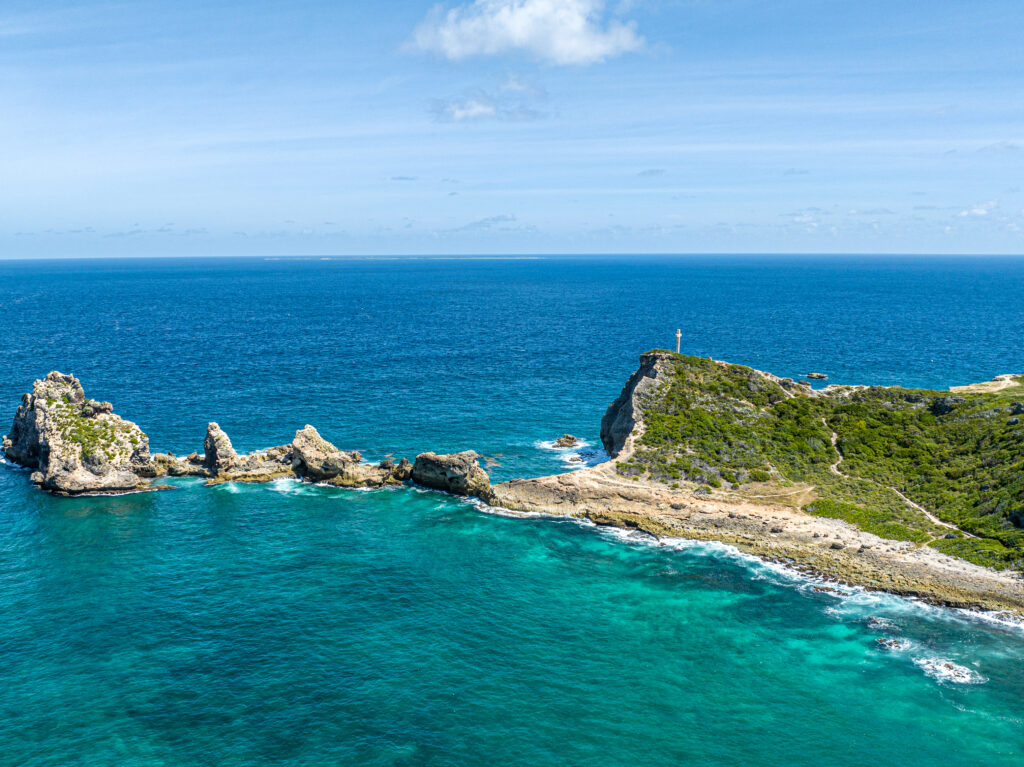
Beyond its marina, Saint-François is known for the Pointe des Châteaux site, which offers breathtaking views of the island of La Désirade. It is also an ideal promontory for observing humpback whales passing through during the breeding season (December to May). The association Mon école ma baleine (My School, My Whale) organizes awareness-raising and observation events called "Les sentinelles de la mer" (The Sentinels of the Sea).
If you ever spot whales or any other cetaceans in the waters of Guadeloupe, keep in mind that the regulations of the Agoa Sanctuary apply: your tour operator must maintain a distance of at least 300 meters from the animals.
Beautiful dives are possible in the waters of Saint-François. A short distance away, at the islet of Petite-Terre, you can encounter lemon sharks and turtles.
As for beaches, there is Raisins Clairs beach, Anse à la Gourde beach, and La Douche beach, where you can enjoy a shower of seawater that penetrates the rock and sprays out in a powerful jet!
Le Moule, surfing destination
Traveling up the eastern side of Grande-Terre, you arrive at Le Moule, the second largest municipality in terms of area, which was once dedicated to sugar cane cultivation. It is therefore not surprising that its port was once an important trading port.
On the maritime side, Le Moule offers a surfing spot at La Bouelle, as well as excursions in the mangroves, by kayak or SUP.
Cliffs and caves at Anse-Bertrand
At the northern tip of Grande-Terre, Anse-Bertrand impresses visitors arriving by sea with its limestone cliffs (nearly 80 meters high!) bathed by the turquoise waters of Pointe de la Grande Vigie.
On the east coast, Trou à Man Coco, at a place called Porte d'Enfer, is a chasm created in the cliff by marine erosion that is well worth a visit. You can also swim at the small beach in the Porte d'Enfer lagoon.
On the west side, you can see Castalia Cove and its turquoise waters (access is dangerous and swimming is prohibited by municipal decree). Next are the discreet and intimate Trou à Man Louis beach and the beach near the chapel close to the village, where you can surf when the swell allows.
Unusual diving in Port Louis
Best known for its marine cemetery, the town of Port-Louis is also worth visiting for its diving sites, mangroves, and beaches. From Port-Louis, you can explore the islets and diving sites of the Grand Cul-de-Sac Marin, a biosphere reserve since 1994.
At the foot of the cliffs of Pointe de la Grande Vigie, the Grotte Amédien site is ideal for an unusual dive, between arches, canyons, tunnels, and caves, where you can encounter cave-dwelling fauna. Here you can see red and copper lobsters, Steerer's shrimp and black brotules, among other species. Equally unique, the Avion dive site invites you to discover the wreck of a CESSNA 188, sunk 23 meters below the surface and now colonized by underwater flora and fauna.
Souffleur Beach is another of Port Louis' attractions, for snorkeling enthusiasts and surfers alike.
From Petit-Canal and Morne-à-l'eau to the islets of Grand Cul-de-Sac Marin
The town of Petit-Canal is worth visiting for its historical appeal, thanks to its monuments inherited from the slave trade period.
From Petit-Canal, the islet of Fajou, located in Guadeloupe National Park, can be reached in about 1.5 hours by sailboat. It is the largest islet in the park and is almost entirely covered with mangroves.
South of Petit-Canal, the town of Morne-à-l'eau, facing Fajou Island, offers a sulfur-rich beach (Babin Beach) and a mangrove forest that can be explored by kayak or paddleboard, connected to the Rotours Canal, a site steeped in history as it was dug by hand by slaves.
After sailing around Grande-Terre, you can also discover the nautical attractions of Basse-Terre, Grand Cul-de-Sac Marin, Petit Cul-de-Sac Marin, and the islands of the Guadeloupe archipelago.
Article written by: Axelle Dorville