Discovering the marine ecosystems of Martinique
In Martinique, the marine environment consists of three major ecosystems—corals, seagrass beds, and mangroves—which play an unexpected role in preserving the island's coastline and its underwater flora and fauna. Preserving these marine ecosystems is therefore essential! We explain why and how.
The coral reef
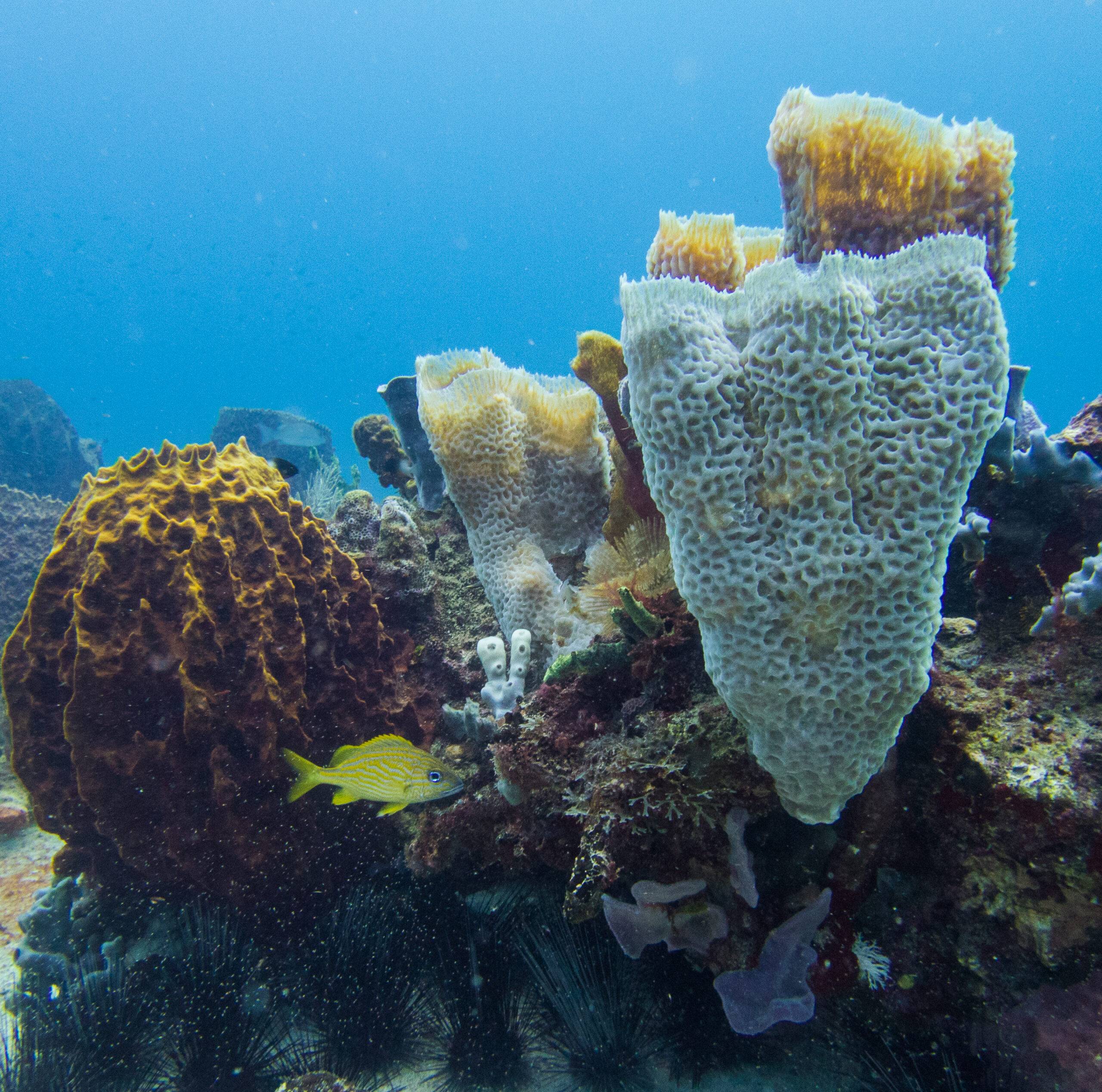
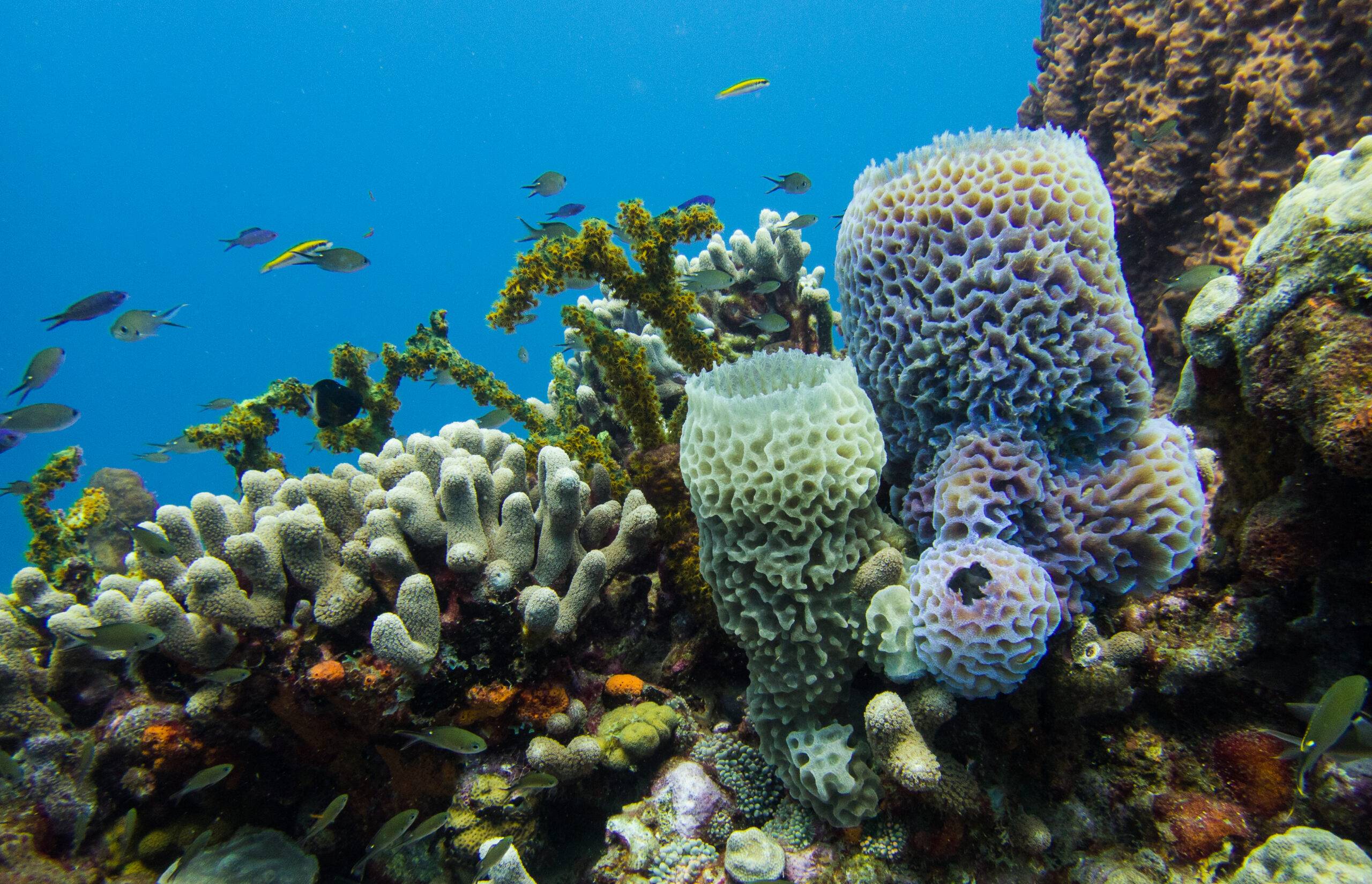
Let's start with the coral reef. Also known as a coral reef, it is a collection of corals that together form a natural structure. If it is so easy to observe corals in Martinique, while snorkeling, diving or on a boat, it is because they develop mainly in warm tropical waters and at a shallow depth, at a maximum of twenty meters underwater, in order to capture enough light.
Light is therefore essential for corals. Why? Because corals are actually animals—called polyps—that live in symbiosis with a microalgae called zooxanthellae, which nourishes the polyp through photosynthesis. And for the record, it is these zooxanthellae that give coral reefs their various shimmering colors by using solar energy during photosynthesis.
Beyond access to light, other elements are essential for the proper development of tropical corals:
- Clear water, so that you can enjoy good light
- Oxygenated water to ensure the survival of micro-algae
- Warm water, between 24°C and 29°C, the ideal temperature for coral calcification and reproduction
All this being said, the reason why coral reefs are so important is that they are home to a varied fauna and flora made up of multiple species of fish, sponges, anemones and gorgonians. Their disappearance would therefore be synonymous with real upheaval in the ecosystem that they shelter.
And that's not all: by breaking the swell from the open sea, coral reefs protect the seagrass beds and mangroves that only develop in calm water. We will tell you more about the importance of these two marine ecosystems in the following.
Understanding the link between global warming and coral death:
Global warming is responsible for the increase in ocean temperatures and the rise in sea level. However, when water temperatures exceed 29°C, the micro-algae cohabiting with the polyps are no longer able to carry out the photosynthesis that is essential for coral development. The corals then expel the Zooxanthellae and reveal their white calcareous structure, hence the coral bleaching phenomenon you have no doubt heard about. Without these micro-algae, however, the polyps are no longer able to feed themselves and perish.
Herbarium
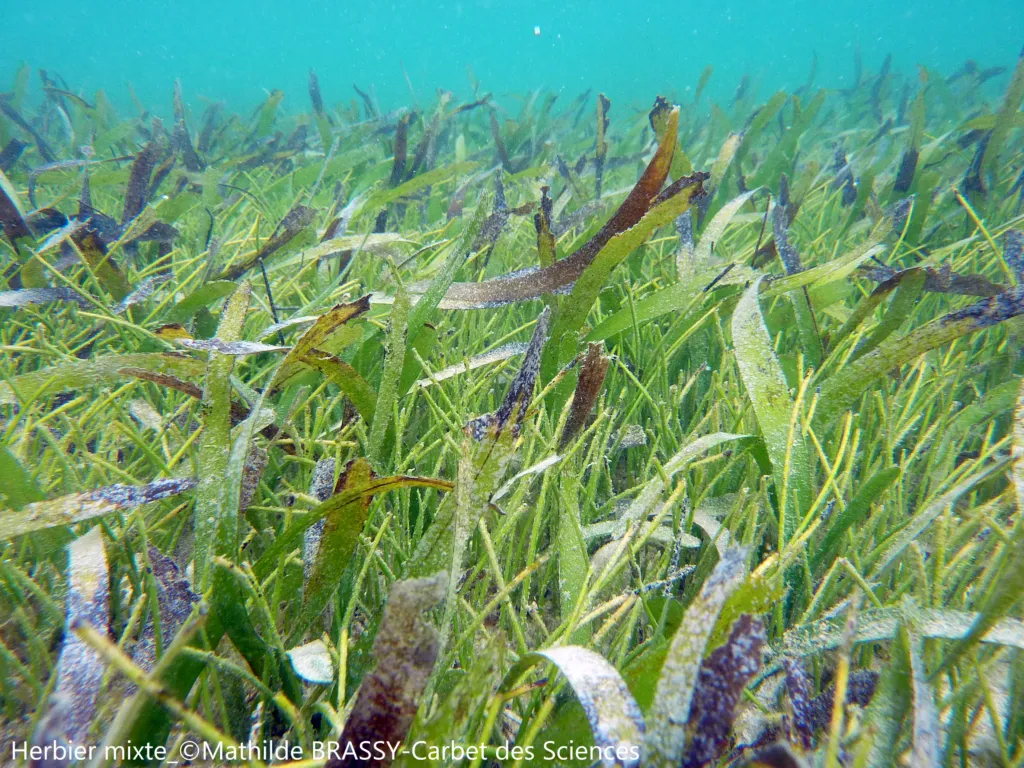
As mentioned above, coral reefs help preserve seagrass beds, underwater plant communities that are also essential to the proper functioning of Martinique's marine environment.
Seagrass beds provide food for various marine grazers, such as turtles (which are a protected species!), certain fish, sea urchins, starfish, and conch, as well as sea cucumbers or holothurians, which are true sand cleaners. But they also help to oxygenate the waters in which they live, capture ocean carbon, slow down currents and thus limit coastal erosion, and trap sediments with their roots. This has two benefits: it prevents sediment from smothering corals and provides an ideal substrate for the development of coastal flora.
Anchoring, inadequate treatment of wastewater discharged onto the coastline, and trampling are all threats to seagrass beds, which are an essential ecosystem of the Martinique coastline and the marine environment in general. That is why it is essential to choose sandy bottoms for anchoring and to use buoys when available to anchor above seagrass beds.
The mangrove
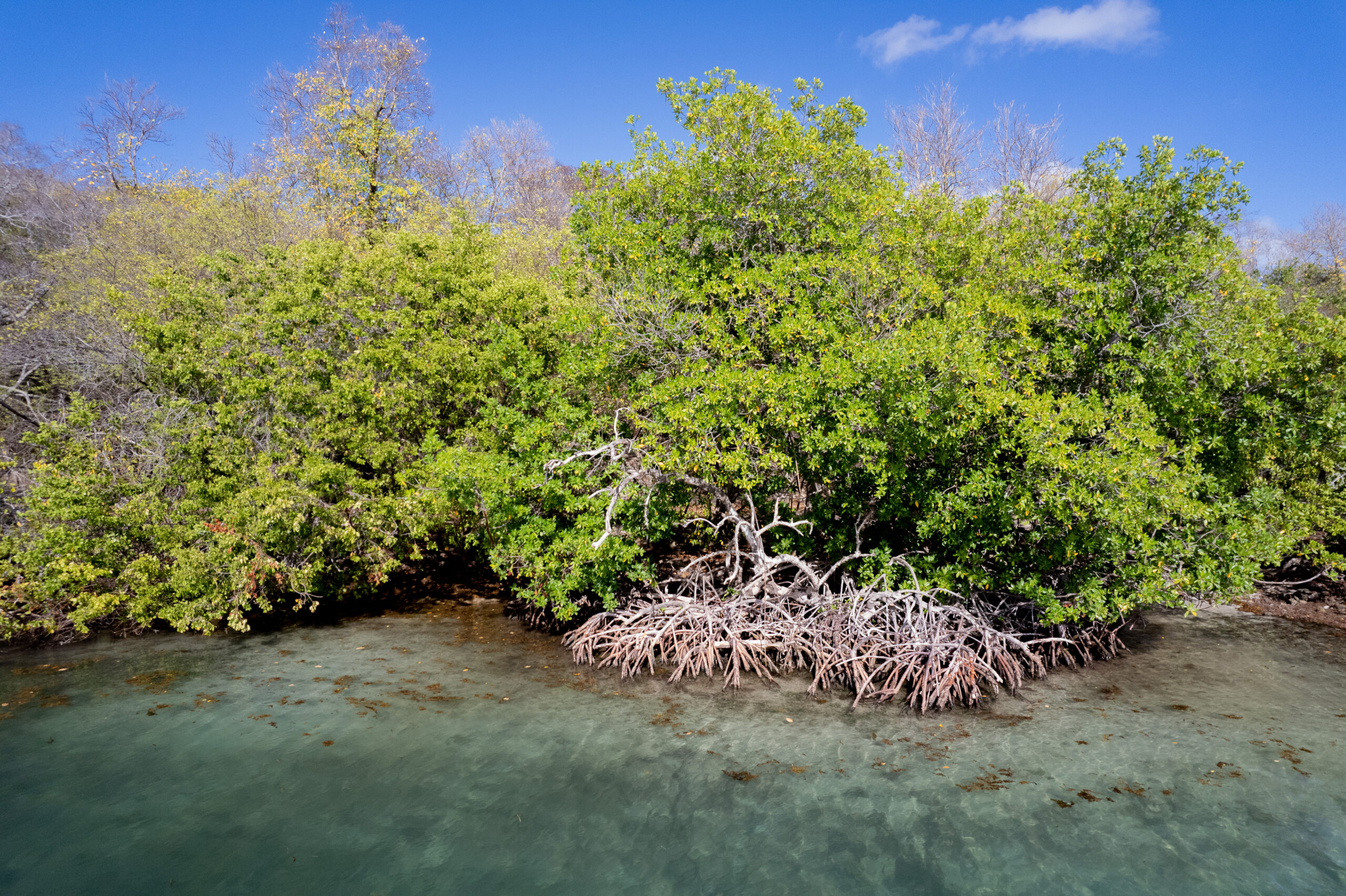
Mangroves are forests that grow between land and sea in brackish water, a mixture of fresh and salt water. Mangrove trees are able to grow in this environment because their aerial roots, like stilts, are able to filter the salt from the sea water and oxygenate themselves in the open air.
For the botanical minute, it is important to know that it is actually the red mangroves that can be seen on the edge of the mangrove. In the back of the mangrove, where there is less water, it is the black mangrove that takes precedence, anchored in the mud; and in the dry zone on dry land, it is the grey and white mangroves that can be found.
What is important to remember is that the preservation and protection of mangroves is essential, as these ecosystems provide invaluable ecological services for both the seabed and the coastline.
Mangroves are real nurseries allowing juvenile fish to develop sheltered from currents and large predators. Once they are ready to set sail, they can then feed in the grass beds and join the coral reefs. Many species of crabs, molluscs, birds and rodents nest in the mangroves.
Thanks to the skilful intertwining of the stilt roots of the mangroves along the coast, mangroves are also able to absorb swell and thus protect the coast from erosion and submersion due to cyclones or even tsunamis.
It should be noted that they also trap sediments and pollution from the land, thus preserving corals, sea grass beds and their species. Finally, like all forests, mangroves trap CO2, a significant asset in the fight against global warming.
The coral reef therefore protects the seagrass beds, which themselves play an essential role for the mangroves, which in turn preserve the seagrass beds and allow many species to develop in complete safety. The good health of this mangrove-grass-coral reef triptych is therefore a determining factor for rich and lively seabeds: an asset for both fishing and leisure activities - diving, snorkelling, sailing - provided that they are always respectful of these precious marine ecosystems.
Enjoy eco-friendly boat trips in Martinique with Voile Nature!
Article written by : Axelle DORVILLE